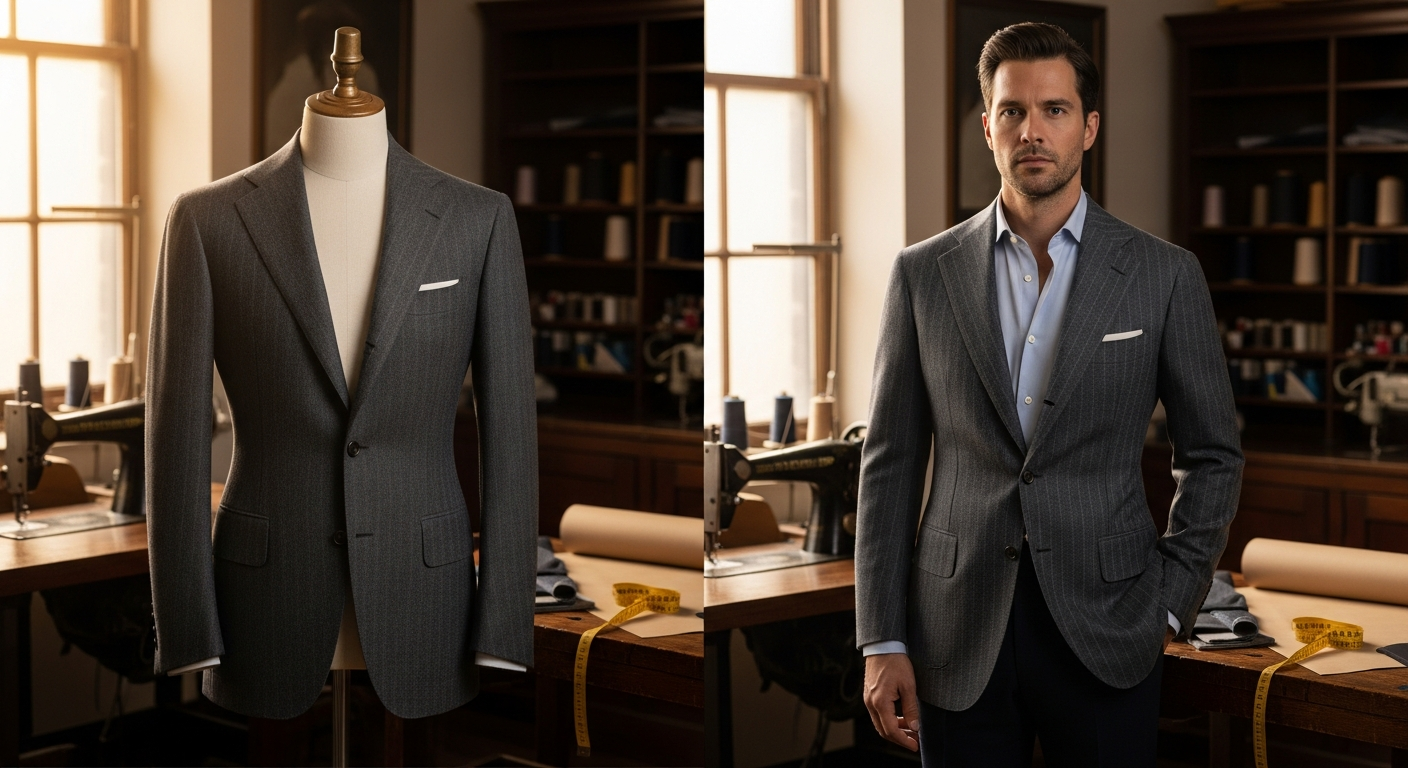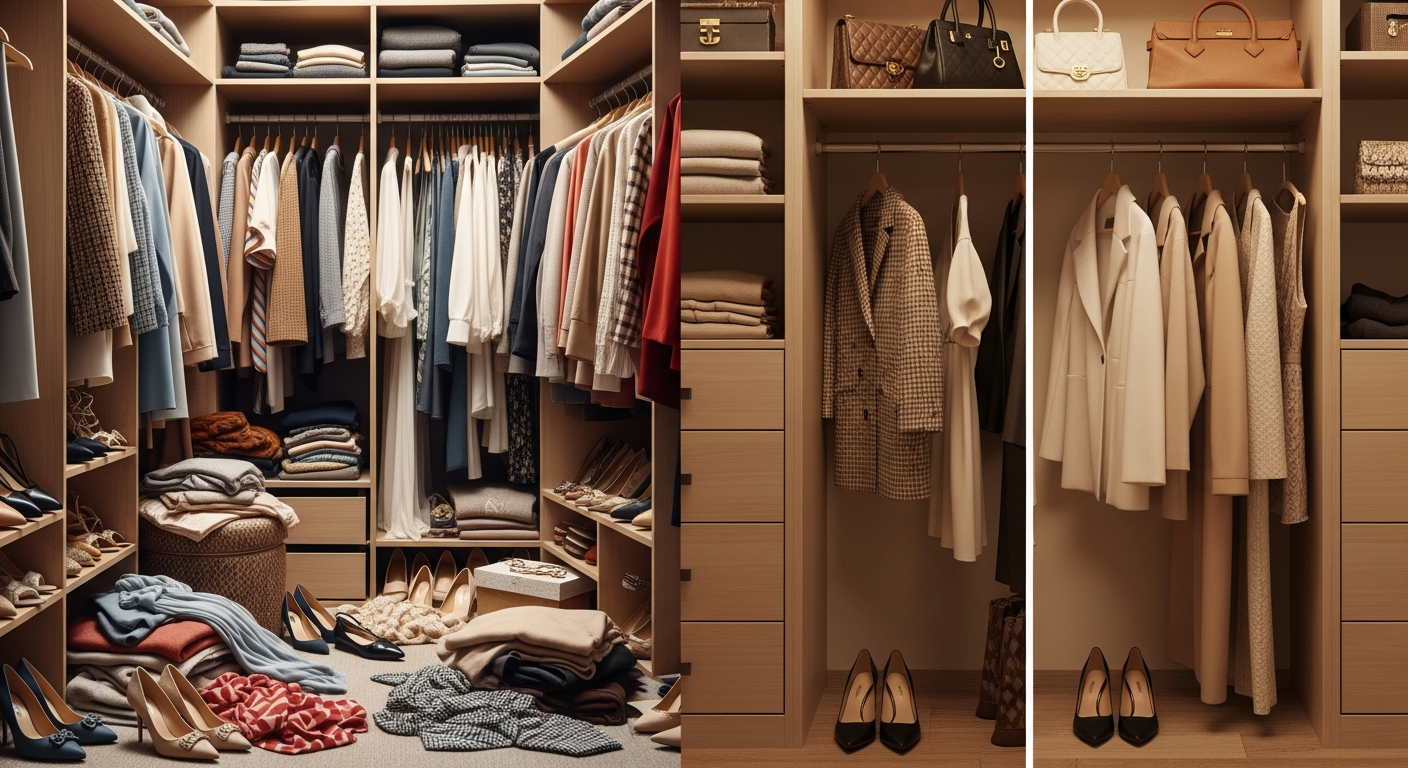
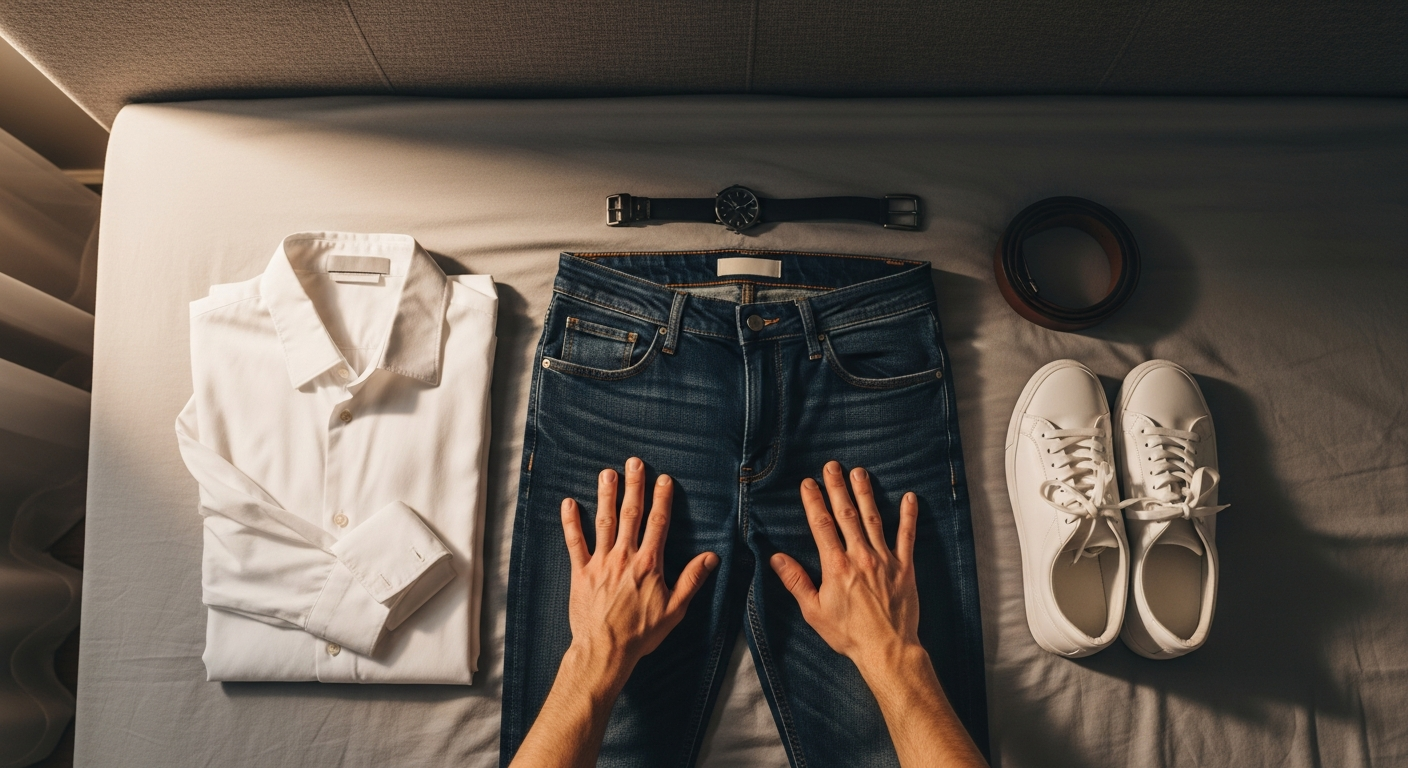
Most guys own enough clothes. The closet is full. The problem is none of it seems to go together at 7:30 in the morning when your brain is still booting up.
That's not a wardrobe problem. It's a systems problem.
This is what Grayne does in about three seconds. But learning the logic is worth your time.
Building an outfit is a repeatable process. Once you learn it, the whole thing takes about 30 seconds. Here's the method.
The 5-Step Outfit Formula
Step 1: Start With the Occasion
Before you touch a hanger, answer one question: what am I doing today?
This determines your formality level. There are really only four levels most guys need:
- Casual: Errands, hanging out, weekends. T-shirts, jeans, sneakers.
- Smart casual: Nice dinner, date, social events. Button-downs, chinos, leather shoes.
- Business casual: Office, client meetings. Collared shirts, trousers, blazer optional.
- Formal: Weddings, galas, important interviews. Suits, dress shirts, ties.
Pick your level. Everything else follows from here.
Step 2: Pick Your Pants First
This is counterintuitive. Most guys start with a shirt. But pants anchor the outfit because they determine the formality and the color palette for everything above.
- Jeans say casual.
- Chinos say smart casual.
- Trousers say business casual or formal.
Dark colors (navy, charcoal, black) are dressier. Lighter colors (khaki, light grey) are more relaxed.
Pick your pants and you've made 40% of the decision.
Step 3: Add a Top With Contrast
Now pick a shirt or top that's a clearly different shade from your pants. Remember the color matching rule: your top and bottom should have visible contrast.
Dark pants? Go lighter on top. White, light blue, light grey.
Light pants? Go darker or bolder on top. Navy, charcoal, olive, burgundy.
For the type of top:
- T-shirt: Casual occasions only.
- Polo: A step up from a tee. Good for smart casual.
- Button-down untucked: Smart casual. The workhorse.
- Button-down tucked: Business casual and up.
- Sweater over a collared shirt: Instant polish for any level.
Step 4: Choose Shoes That Match the Energy
Your shoes should match the formality of the rest of the outfit. Not dressier, not more casual.
- Sneakers go with casual and some smart casual.
- Loafers or chukka boots bridge smart casual and business casual.
- Leather dress shoes go with business casual and formal.
Match your belt to your shoes (brown with brown, black with black) and you're done thinking about accessories.
Step 5: Add One Layer (Optional)
If the weather calls for it or you want to look more polished, add a single layer:
- Casual: A denim jacket, a zip-up, or a field jacket.
- Smart casual: A crewneck sweater or a casual blazer.
- Business casual: A blazer.
- Formal: Your suit jacket.
One layer. Not two. Layering more than that requires more thought and usually more experience.
The Formula in Action
Let's build three outfits using this system.
Saturday Errands (Casual)
- Occasion: Running around, grabbing coffee, no plans.
- Pants: Dark jeans.
- Top: White crew neck t-shirt (contrast with dark jeans).
- Shoes: White sneakers.
- Layer: Olive field jacket (it's 60 degrees).
- Occasion: A restaurant with actual plates. Nothing fancy.
- Pants: Grey chinos.
- Top: Navy button-down, untucked.
- Shoes: Brown leather chukka boots.
- Layer: None needed. It's warm inside.
- Occasion: Office meeting, want to look sharp.
- Pants: Charcoal trousers.
- Top: Light blue button-down, tucked in.
- Shoes: Brown leather derbies. Brown belt.
- Layer: Navy blazer.
Total time to decide: about 20 seconds.
Dinner With Friends (Smart Casual)
Done. You look like you thought about it without looking like you overthought it.
Client Meeting (Business Casual)
This outfit will carry you through almost any professional situation short of a courtroom.
Want a free men's style guide?
We put together a 20-piece capsule wardrobe guide with every essential, why it works, and how to combine them into dozens of outfits. Yours free when you join the Grayne waitlist.
GET THE FREE GUIDECommon Mistakes to Avoid
Matching too closely. Navy shirt with navy pants looks like a uniform. You want contrast, not coordination.
Mixing formality levels. Dress shoes with gym shorts doesn't work. Sneakers with a suit doesn't work (unless you're a fashion editor, and you're not). Keep all pieces at roughly the same level.
Too many colors. Stick to 2-3 colors. More than that and the outfit gets noisy. If you're wearing a patterned shirt, keep everything else solid.
Ignoring fit. A perfectly color-matched outfit in the wrong size still looks bad. Fit is always the priority. The fit guide covers this in detail.
Overthinking it. If you've followed steps 1 through 4 and the outfit looks reasonable, it is reasonable. Don't second-guess for 20 minutes. Grab it and go.
The Cheat Code
This 5-step process works every time. But some mornings you just don't want to think. That's where Grayne comes in. Photograph your closet, tell the app what you're doing today, and it builds the outfit for you using the same logic: occasion, contrast, color matching, formality.
It's this process, automated.
But whether you use the app or not, the formula works. Occasion, pants, contrasting top, matching shoes, optional layer. That's it. Five steps, 30 seconds, and you look like you know what you're doing.
Because now, you do.